Anfänger · Pre-HSKChinesisch (Mandarin)
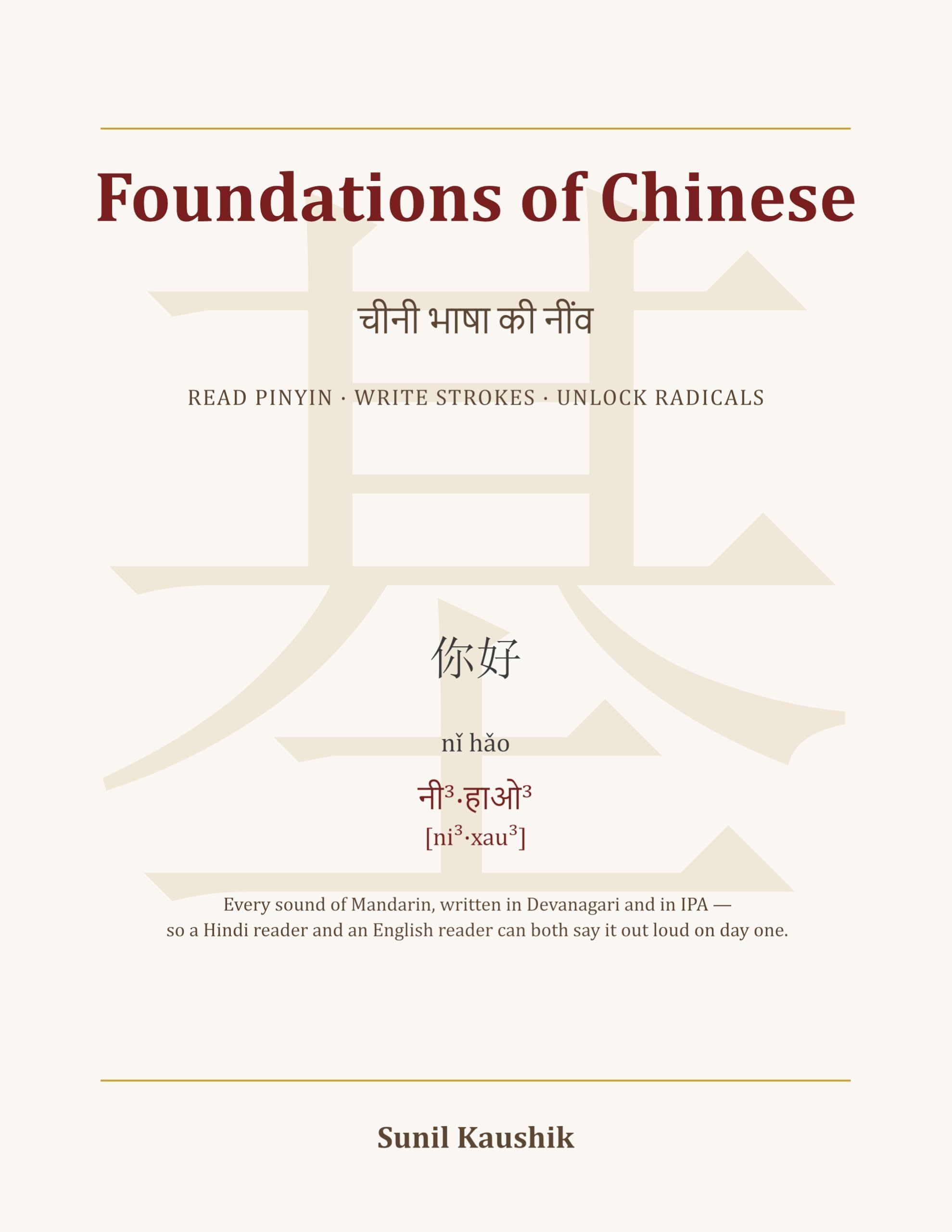
Foundations of Chinese
Read Pinyin, Write Strokes, Unlock Radicals: Mandarin Sounds in Devanagari and IPA, for Hindi and English Readers
“Chinesisch hat wenige Laute. Die chinesische Schrift besteht aus kleinen Bausteinen.”
Kurz gesagt
Ein Einsteigerbuch zu Lauten, Strichen und Radikalen des Mandarin, jedes Wort in Pinyin, Devanagari und IPA: die vier Töne, die vollständige Silbentabelle, die Regeln der Strichfolge und die 64 Radikale, die dir das Wörterbuch erschließen.
Bei Amazon kaufen
Die Erklärungen sind auf Englisch; jedes Wort hat außerdem Devanagari, IPA und eine Bedeutung auf Hindi.
Das bekommst du
- The four tones, the puff pairs, j q x and zh ch sh r — each hard sound with a mouth drawing and a Hindi anchor word.
- The full Mandarin syllable chart (about 400 syllables) on one spread, every one in Devanagari.
- The eight strokes and the seven rules of stroke order, with numbered diagrams and practice grids.
- The 64 radicals that unlock the dictionary, taught in families with stories and drills.
- Answers to every drill, plus a complete pinyin-to-Devanagari reference table.
Über dieses Buch
Die vollständige Beschreibung unten stammt vom Autor selbst und ist auf Englisch.
Chinese sounds are few. Chinese writing is built from small parts. This book gives you both, in the order you need them.
Every word in this book carries a line in Devanagari. Pinyin uses Roman letters, but Roman letters trick a Hindi reader: pinyin c is not “k”, pinyin x is not “ks”. Hindi already has the one thing Chinese needs most, the puff of air in ka and kha, ta and tha, pa and pha, and this book uses it. You can read the sounds out loud on day one.
Part A, The Sounds of Chinese. The four tones and the quiet fifth. The puff pairs. The smiling sounds j q x. The curled tongue of zh ch sh r. Every vowel and every ending. Each hard sound comes with a drawing of the mouth, a Hindi word to anchor it, and a sound-alike from Urdu, French or English. The part ends with the full syllable chart of Mandarin on one spread, about 400 syllables, every one written in Devanagari.
Part B, Hanzi Basics. What a character really is, and the myths about it. The eight strokes and the family of turns and hooks. The seven rules of stroke order, with numbered diagrams and practice grids. How characters are built, and how they carry sound.
Part C, The Radicals. The sixty-four radicals that unlock the dictionary, taught in families with stories, worked examples and drills, and a look-up index by stroke count.
Every drill has its answers. Four appendices hold the complete pinyin-to-Devanagari table, the stroke sheet and the radical chart for lifelong reference.
Book 1 of a series that goes on to HSK-level hanzi workbooks and grammar readers, all with the same treatment: hanzi, pinyin, Devanagari and IPA.
Für wen dieses Buch ist
Absolute Mandarin-Anfänger, HSK-Lernende, die ein solides Fundament wollen, und alle, denen es schwerfiel, Chinesisch über englische Schreibweisen zu hören.
Mehr aus dieser Reihe
Chinesisch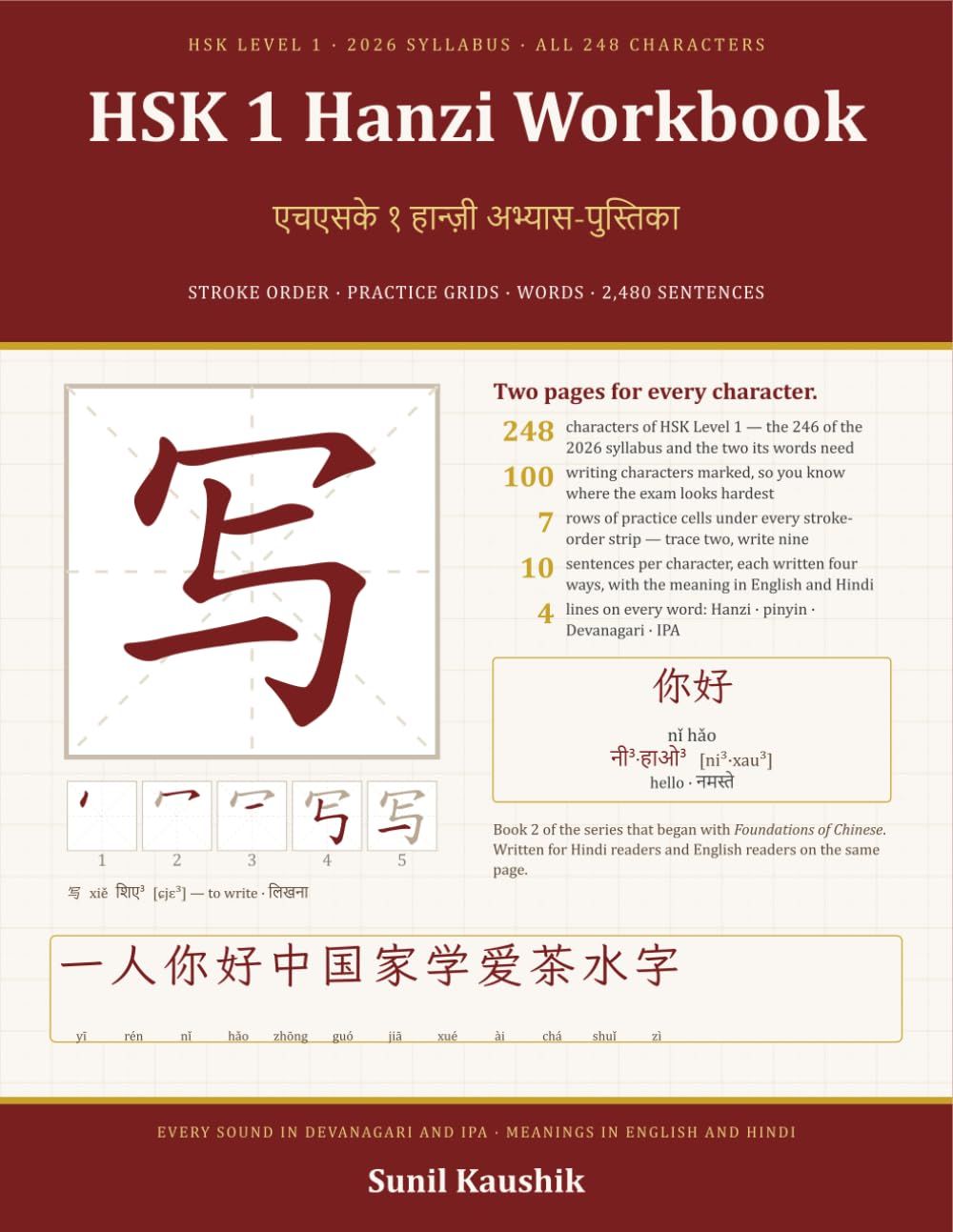
HSK 1
HSK 1 Hanzi Workbook
Zwei Seiten für jedes Zeichen von HSK-Stufe 1. Den Rest macht deine Hand.
Taschenbuch
HSK 1
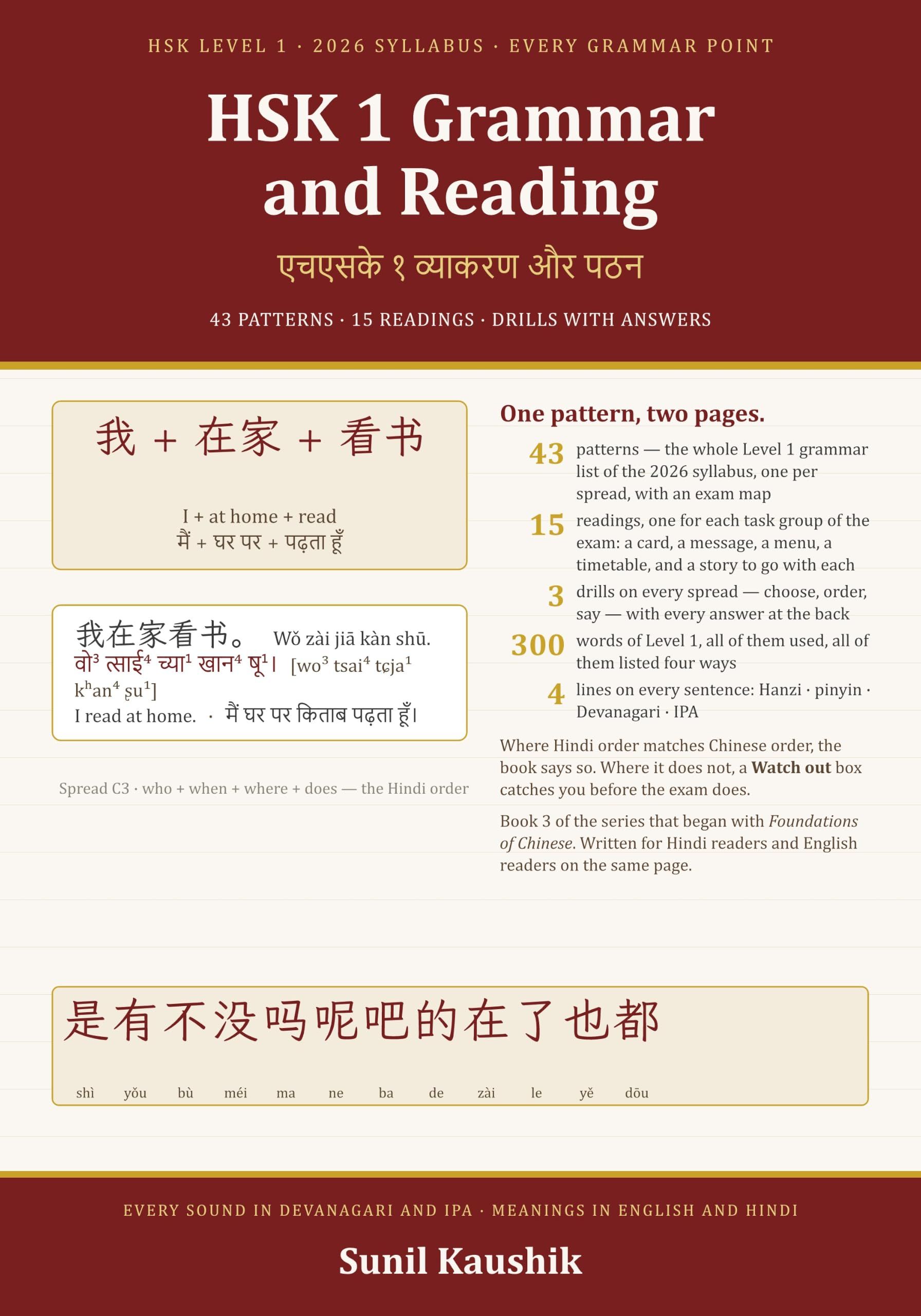
HSK 1 Grammar and Reading
Chinesisch hat sehr wenige Regeln. Hier sind alle für HSK-Stufe 1.
Taschenbuch · Kindle-E-Book