Iniciante · Pré-HSKChinês (mandarim)
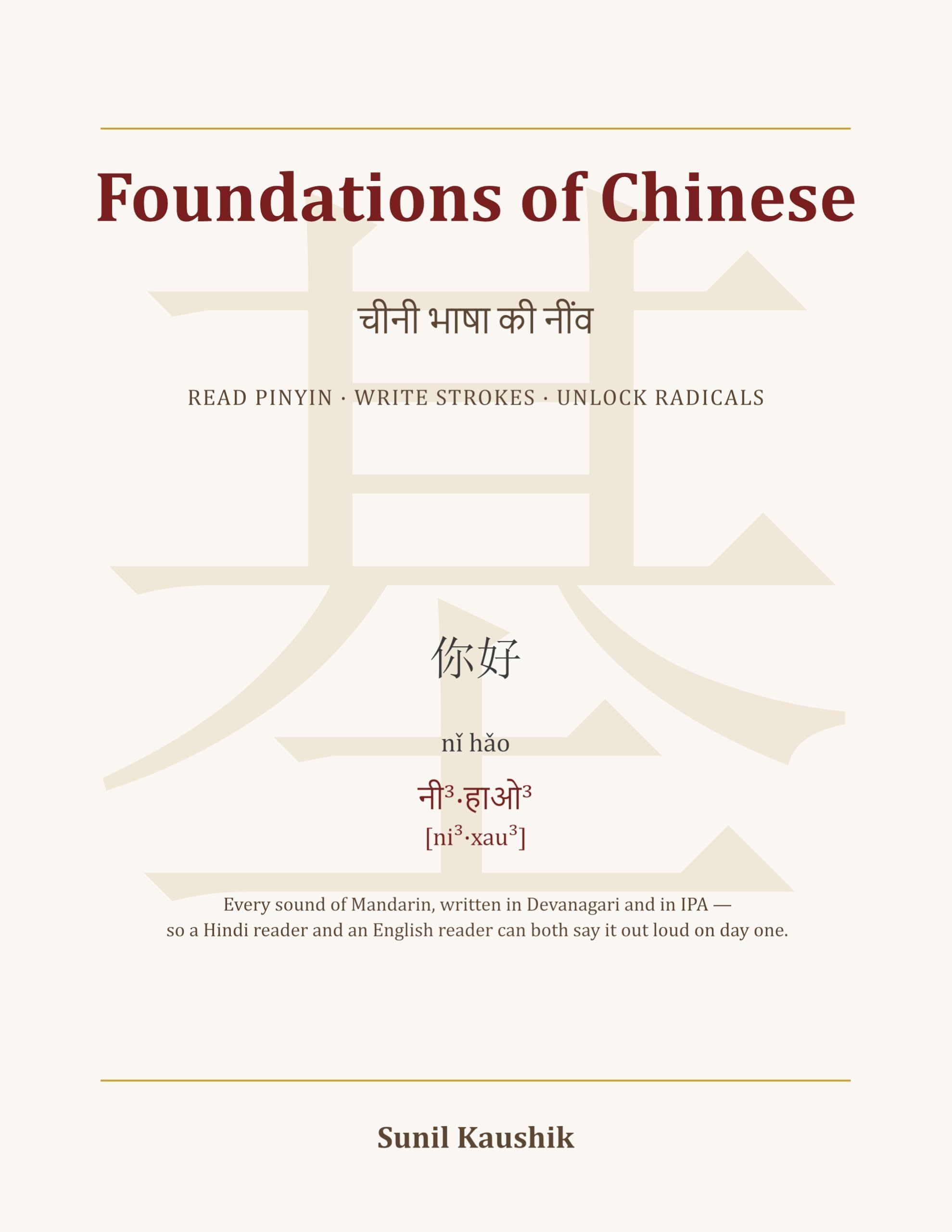
Foundations of Chinese
Read Pinyin, Write Strokes, Unlock Radicals: Mandarin Sounds in Devanagari and IPA, for Hindi and English Readers
“O chinês tem poucos sons. A escrita chinesa é feita de peças pequenas.”
Em resumo
Um guia para iniciantes sobre os sons, traços e radicais do mandarim, com cada palavra em pinyin, devanágari e AFI: os quatro tons, a tabela completa de sílabas, as regras da ordem dos traços e os 64 radicais que abrem o dicionário.
Comprar na Amazon
As explicações são em inglês; cada palavra também traz devanágari, AFI e o significado em híndi.
O que você encontra
- The four tones, the puff pairs, j q x and zh ch sh r — each hard sound with a mouth drawing and a Hindi anchor word.
- The full Mandarin syllable chart (about 400 syllables) on one spread, every one in Devanagari.
- The eight strokes and the seven rules of stroke order, with numbered diagrams and practice grids.
- The 64 radicals that unlock the dictionary, taught in families with stories and drills.
- Answers to every drill, plus a complete pinyin-to-Devanagari reference table.
Sobre este livro
A descrição completa abaixo é do próprio autor, em inglês.
Chinese sounds are few. Chinese writing is built from small parts. This book gives you both, in the order you need them.
Every word in this book carries a line in Devanagari. Pinyin uses Roman letters, but Roman letters trick a Hindi reader: pinyin c is not “k”, pinyin x is not “ks”. Hindi already has the one thing Chinese needs most, the puff of air in ka and kha, ta and tha, pa and pha, and this book uses it. You can read the sounds out loud on day one.
Part A, The Sounds of Chinese. The four tones and the quiet fifth. The puff pairs. The smiling sounds j q x. The curled tongue of zh ch sh r. Every vowel and every ending. Each hard sound comes with a drawing of the mouth, a Hindi word to anchor it, and a sound-alike from Urdu, French or English. The part ends with the full syllable chart of Mandarin on one spread, about 400 syllables, every one written in Devanagari.
Part B, Hanzi Basics. What a character really is, and the myths about it. The eight strokes and the family of turns and hooks. The seven rules of stroke order, with numbered diagrams and practice grids. How characters are built, and how they carry sound.
Part C, The Radicals. The sixty-four radicals that unlock the dictionary, taught in families with stories, worked examples and drills, and a look-up index by stroke count.
Every drill has its answers. Four appendices hold the complete pinyin-to-Devanagari table, the stroke sheet and the radical chart for lifelong reference.
Book 1 of a series that goes on to HSK-level hanzi workbooks and grammar readers, all with the same treatment: hanzi, pinyin, Devanagari and IPA.
Para quem é este livro
Iniciantes absolutos em mandarim, estudantes de HSK que querem uma base bem feita e quem já teve dificuldade para ouvir o chinês através da ortografia do inglês.
Mais desta série
Chinês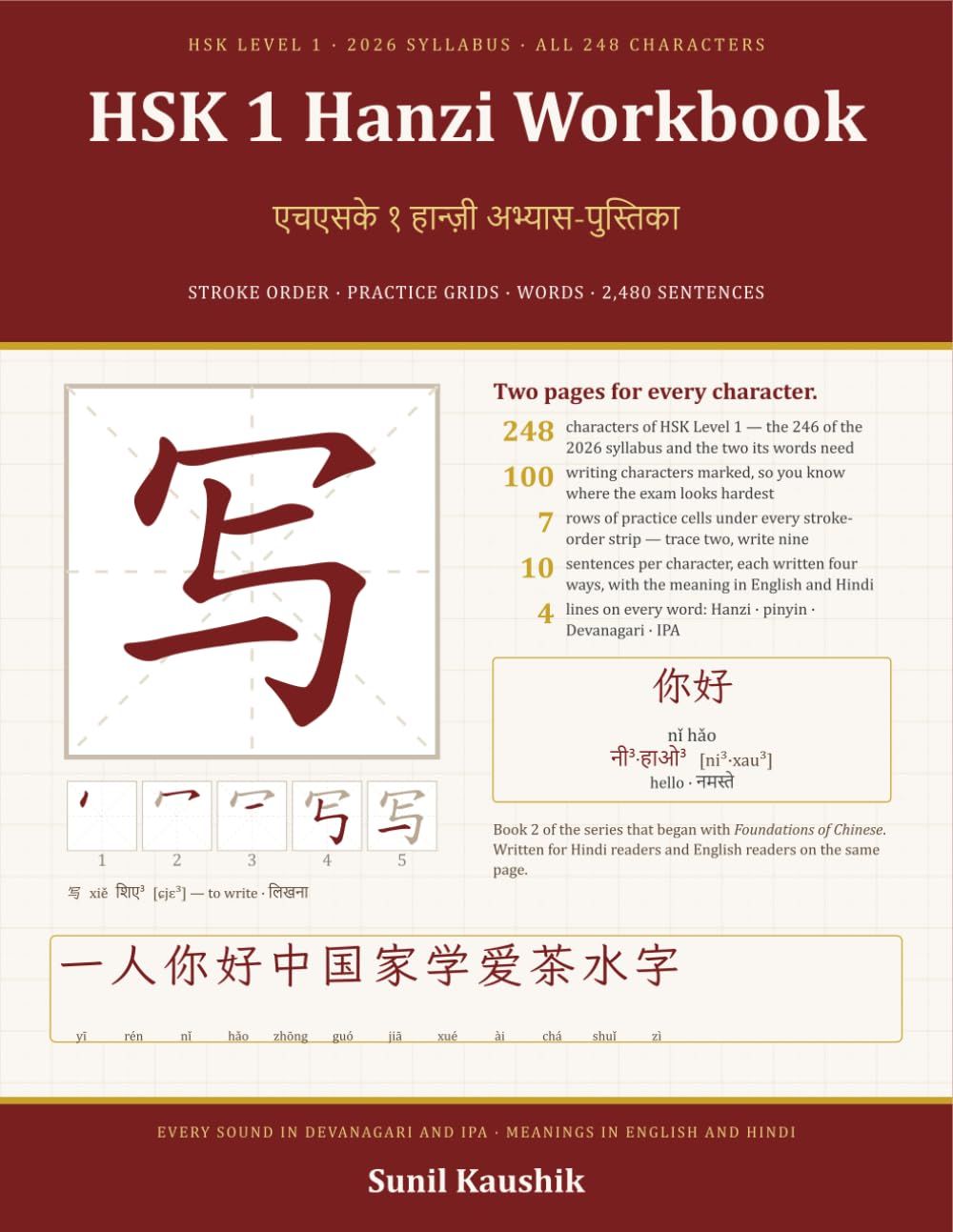
HSK 1
HSK 1 Hanzi Workbook
Duas páginas para cada caractere do HSK nível 1. Sua mão faz o resto.
Capa comum
HSK 1
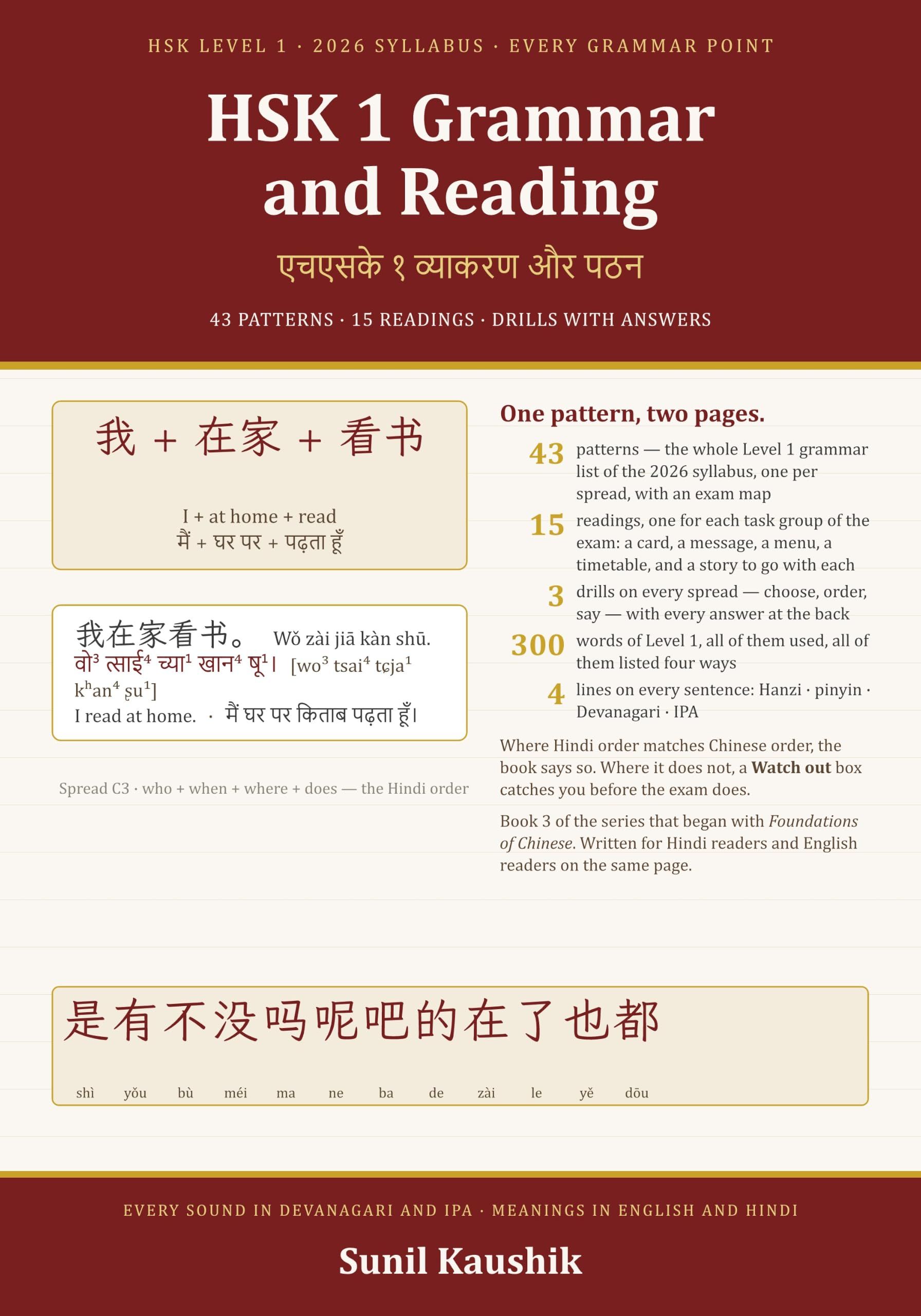
HSK 1 Grammar and Reading
O chinês tem pouquíssimas regras. Aqui estão todas as do HSK nível 1.
Capa comum · eBook Kindle